Sign language is a language in its own right
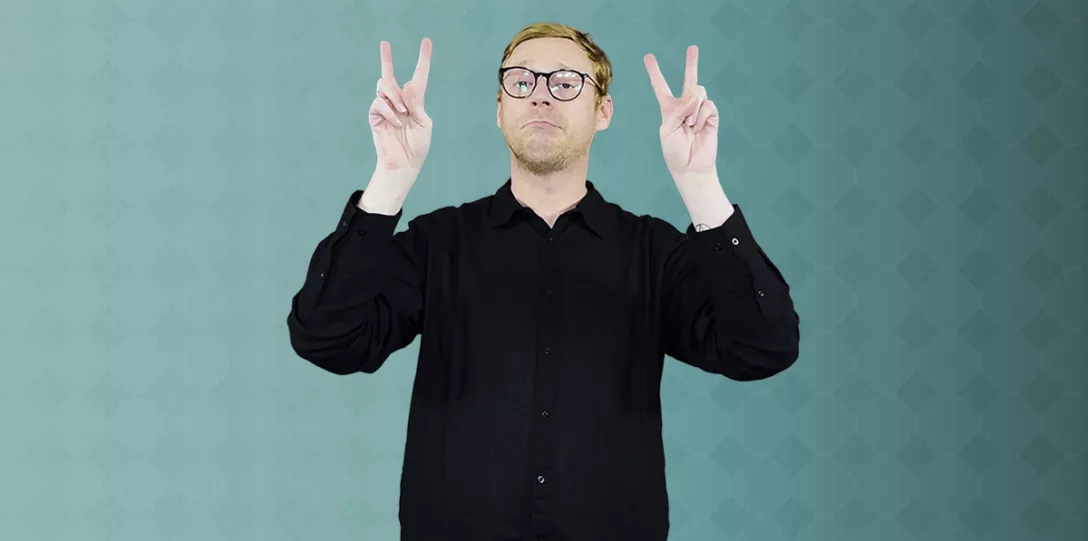
Sign language is not a translation of spoken language using the hands – it is a language in its own right. It has its own grammar, word order, structure, and mode of expression (facial expressions, body movements, and mouth gestures). While spoken languages work through tone and word order, sign language functions visually and spatially, using spatial reference, movement, facial expressions, and body posture to convey meaning. That's why it can't simply be translated “one-to-one” – sign language is just as complex and diverse as any spoken language.
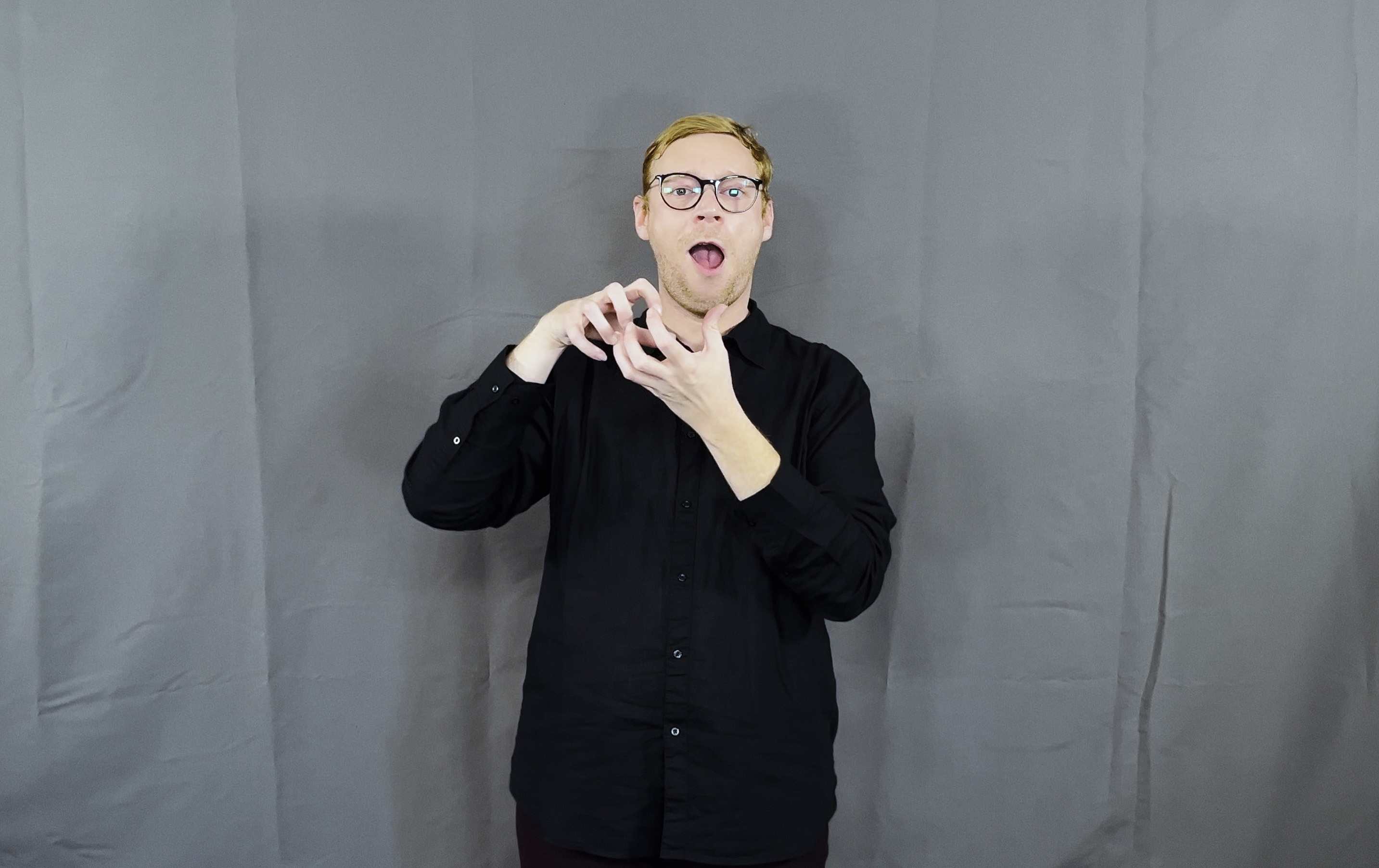
Glosses – written form of sign language
Since sign language has no written form, glosses are used to write down or analyze signs. You do not write down the spoken language, but what you sign. This means that the word order does not correspond to spoken language grammar, but to sign language order. There are important rules to follow for glosses, including:
- All signs are capitalized.
- Pronouns are indicated with the index finger.
- Plus signs indicate repetitions or plurals.
- Space and movement are also written down.
- Non-manual markers include raising the eyebrows for questions or conditions, or shaking the head for negations.
Sign language grammar
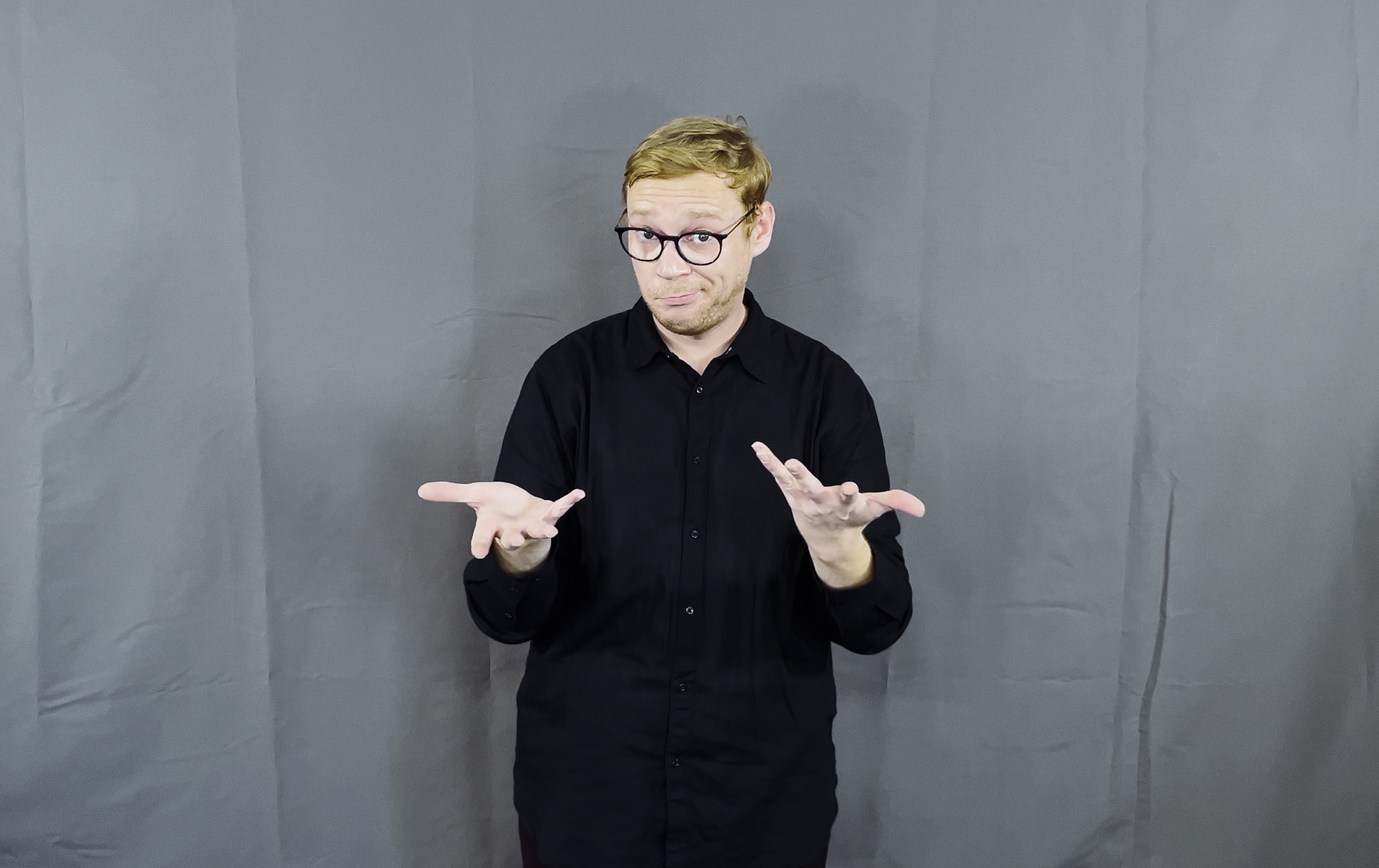
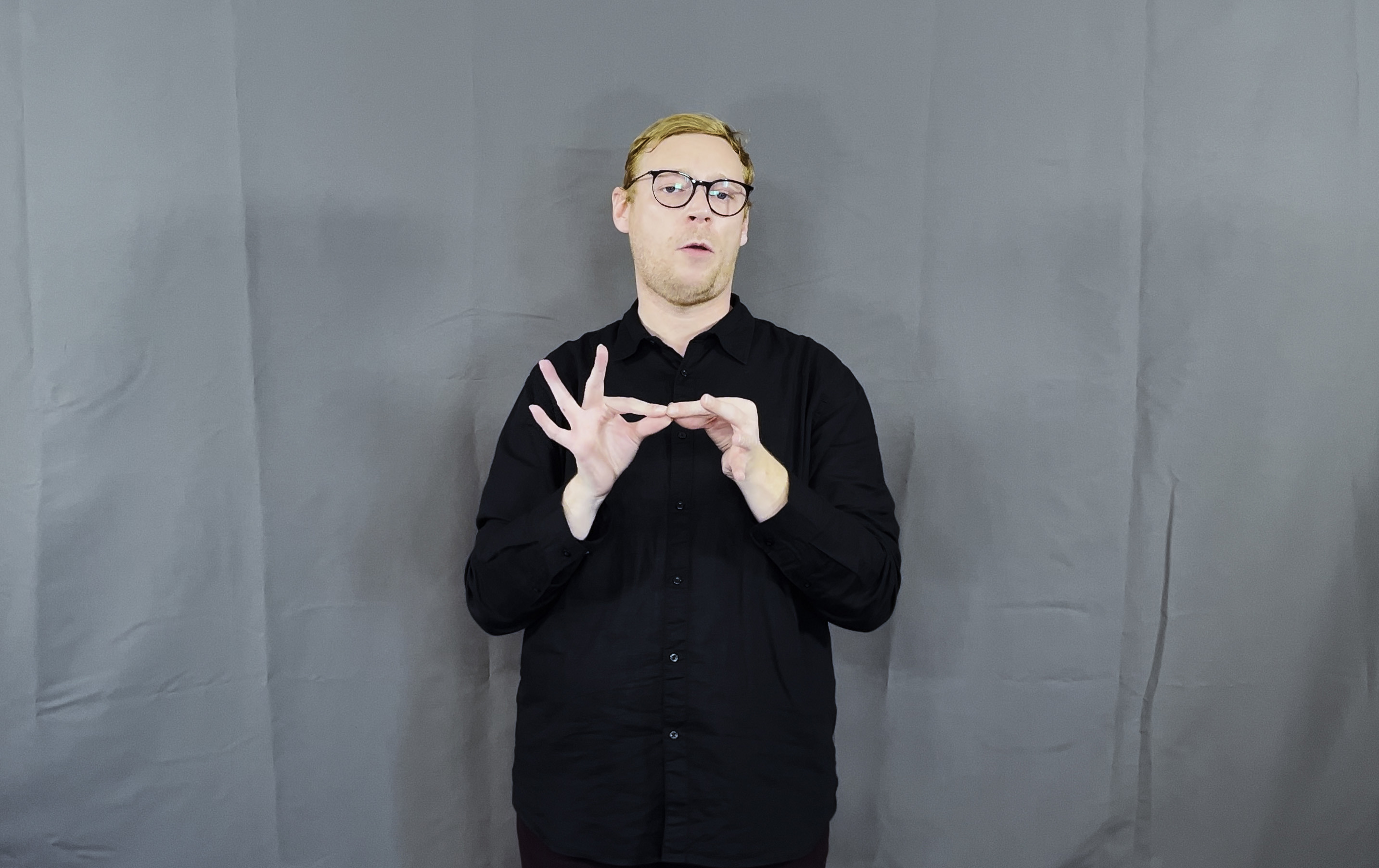
Sign language has its own grammar, which differs significantly from spoken language.
1. In addition to the above rules
Sentence structure/word order: A typical order is TIME – PLACE – PERSON – OBJECT – ACTION. In addition, sign language is topicalizing, meaning that the TOPIC comes first, followed by a COMMENT on it.
Mouth gestures: Mouth gestures are an important part of sign language grammar. They support or change the meaning of a sign. Mouth gestures are not spoken words, but grammatical signs, for example closed or open lips or a relaxed or tense mouth.
2. Pronouns as index
Instead of “I, you, he/she/it,” you point your finger, for example, at yourself, at the person you are talking to, or at the location of a person.
3. Repetitions and plural
Repetition and plural are shown by the plus signs “++” or by movement (see 4. Space and movement).
4. Space and movement
Time: Sign language has no verb endings or tenses. Time is indicated by adverbs of time (such as yesterday, tomorrow, now) or spatial location.
Spatial grammar: The space in front of the body is used as grammatical space. People, places, or things are placed in space and actions are indicated in this direction.
Classifiers indicate the shape, movement, or position of things or people.
5. Non-manual markers (NMM)
Facial expressions, head movements, body posture, and body language are part of grammar.
Negation is shown with the word NOT or by head movements/facial expressions (shaking the head).
Also interesting:
How is a sign language video created?
How does quality assurance work at alangu?
How do we teach our AI sign language?
alangu welcomes EUD principles on AI and sign language