Heise Magazine: c’t - Avatars learn Sign Language
Already on March 25, 2022, you can find out what’s featured in c’t 8/2022 - magazine for computer technology by Heise Medien:
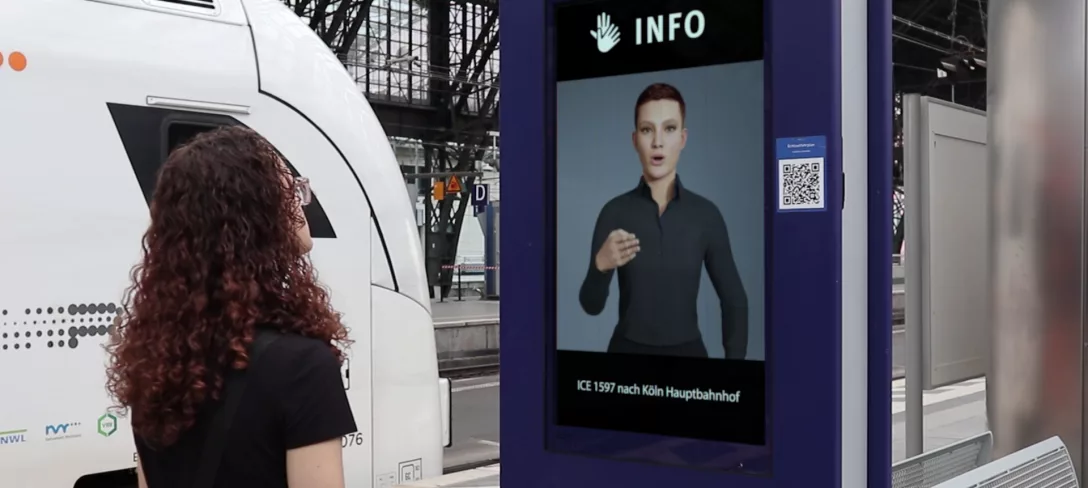
Knowledge | Accessibility | c’t 8/2022 p. 132 | Web and App Avatars Inform Deaf People
Arne Grävemeyer: “Web accessibility means that deaf people can also access all essential information. Avatars offer the opportunity to quickly spread and standardize sign language, and in the future, they could even translate text into signs simultaneously”.
Virtual characters on websites, in apps, or on digital displays are increasingly intended to inform deaf people using sign language. In the next development step, smoothly signing avatars could automatically translate website content. This is important because hearing people often don’t realize that written language is like a foreign language for many deaf people - about 80% have significant deficits in reading comprehension and vocabulary. The reason is that written language is closely based on spoken language, which means that reading skills decrease the more severe a person’s hearing loss is.
For this reason, the Barrier-Free Information Technology Ordinance (BITV 2.0) and the Accessibility Enhancement Act (BFSG) require that public institutions and companies provide key content on their websites and services in Sign Language. Without signing avatars, this is hardly feasible, as there are only a few hundred qualified human interpreters in Germany. Videos produced with human sign language interpreters are also static and cannot be adapted quickly. Content created with avatars, on the other hand, can be modified rapidly and scaled easily, making avatars a highly effective way to deliver information in sign language.
Our Vision
At alangu, our vision is to revolutionize communication accessibility and create a world where everyone, regardless of hearing ability, can engage, connect, and thrive. Every day, alangu’s avatars and solutions, such as the Sign Language Avatar Toolkit, bring us one step closer to this future.
For updates on our latest developments:
Also interesting:
How is a sign language video created?
How does quality assurance work at alangu?
How do we teach our AI sign language?