Civic Coding Forum “Fail Forward” on the Use of AI
The Civic Coding Forum “Fail Forward” from the series “Ethical Use of AI: Theory, Practice, and Learnings” encourages a transparent culture of learning from mistakes in the development and implementation of civic-oriented AI projects. Experiences and practical examples show that errors are part of the learning process and provide valuable lessons for growth. “Civic Coding – Innovation Network AI for the Common Good” is a joint initiative of the Federal Ministry of Labour and Social Affairs (BMAS), the Federal Ministry of Education, Family, Seniors, Women and Youth (BMBFSFJ), the Federal Ministry for the Environment, Nature Conservation, Nuclear Safety and Consumer Protection (BMUKN), and the Federal Ministry for Digital and State Modernization (BMDS).
Alexander Stricker, founder and CEO, discusses challenges and learnings on the journey from basic research to the sign language avatar for greater digital participation of Deaf people:
Click here to register for the forum and click here for the forum report (German).
Find our summary below:

Civic Coding Forum – Fail Forward: How Public-Interest AI Projects Learn from Their Mistakes
This forum, part of the event series “Ethical Use of AI: Theory, Practice, and Learnings”, which took place on November 12, 2024, focused on constructive ways of dealing with mistakes. Representatives of public-interest AI projects openly shared their experiences and demonstrated what insights can be gained for their own project work. The emphasis was less on the setbacks themselves and more on the lessons learned from them. These clearly showed why it is important to take risks, pursue new ideas, and continue working persistently despite challenges.
Key takeaways on dealing with mistakes:
- Understanding mistakes as a learning process and a catalyst for new ideas
- Participation as a success factor, including the involvement of affected target groups
- Openness and transparency create trust and acceptance
- Purposefully strengthening collaboration within interdisciplinary teams
“Learning knows no boundaries. We should make use of the potential to learn from mistakes and try to find solutions together with many different cultures, personalities, and undiscovered strengths.”
Alexander Stricker, Founder and CEO
From Basic Research to a Sign Language Avatar: Digital Inclusion for Deaf People
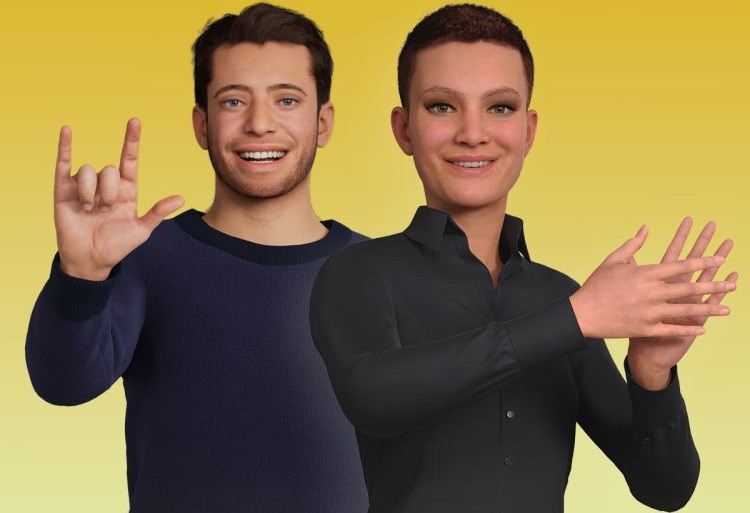
To support digital access to information for deaf people and those who rely on sign language, a concrete solution for digital accessibility emerged from many years of basic research in the form of a sign language avatar. For many years, Alexander Stricker and his team have been developing technologies for translating sign language using digital avatars in order to facilitate access to digital content for deaf people. Based on findings from publicly funded research projects, the sign language avatar ultimately emerged and is now available as a product and has received multiple awards. At the same time, it became clear that the path to this point was marked by challenges and mistakes from which important insights were gained.
Challenges and Learnings
From the outset, the sign language avatar project faced a wide range of challenges, as digital meetings, for example, were only partially accessible for many deaf people. In addition, technical hurdles, a high need for coordination, and collaboration within an interdisciplinary and mixed team of hearing and deaf participants placed a strain on everyday project work. Differing expectations, varying levels of knowledge, and the high technological demands – particularly the transfer of the complex grammar of sign language into digital models – presented further key difficulties. A lack of knowledge about Deaf culture also made targeted trust-building necessary.
The project also encountered some critical voices in the public sphere, as the goals and functioning of the research were not communicated clearly enough. As a result, the team learned to involve the Deaf community more closely, communicate more transparently, and continuously intensify dialogue (see Instagram). These learnings made a significant contribution to the project’s success. Stricker also emphasized the great creative potential that collaboration with people with disabilities offers for the further development of AI.
Click here to register for the forum and click here for the forum report (German).