Accessibility in Transition: Opportunities and Limitations of Sign Language Avatars
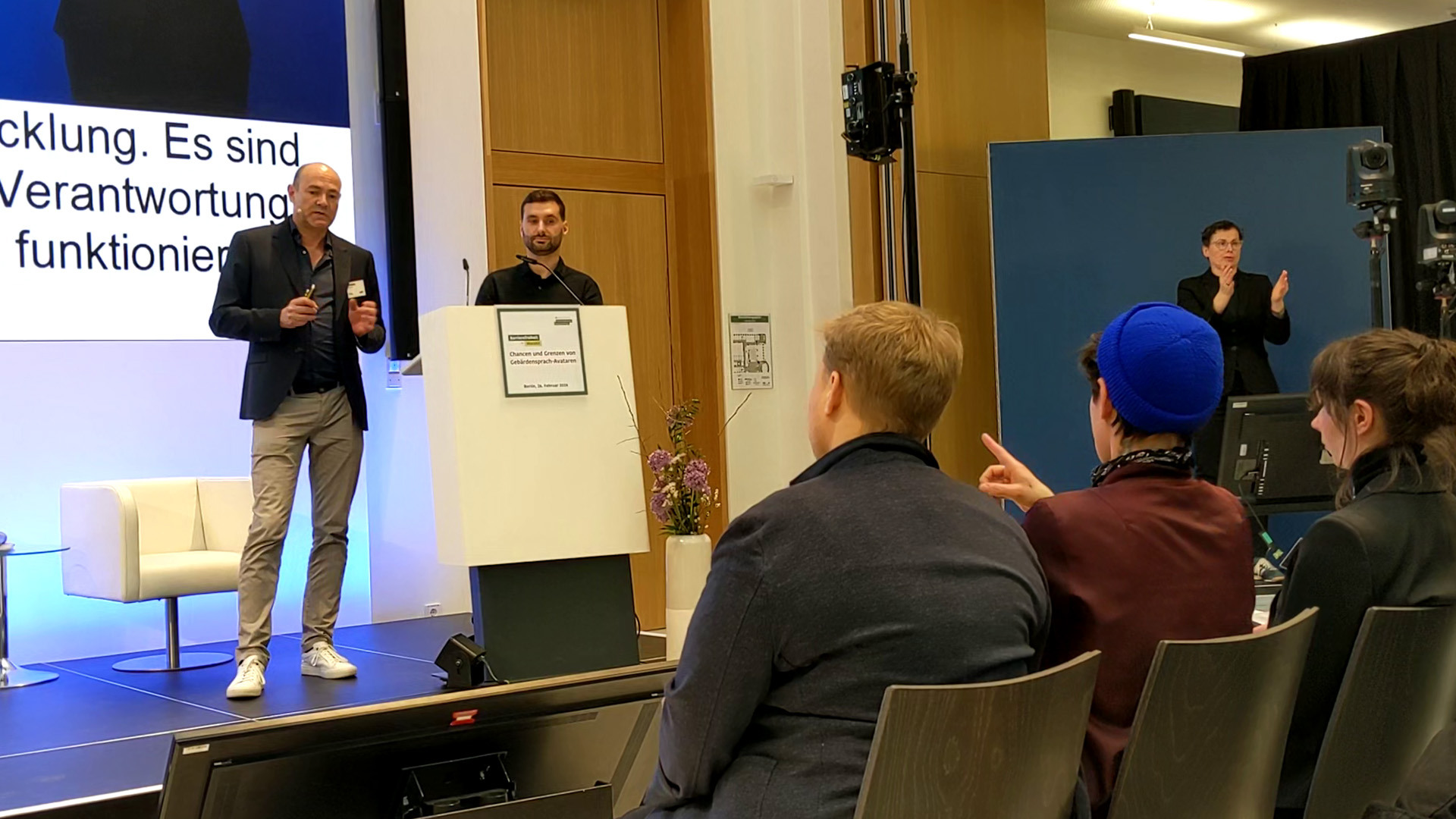
Strong engagement, diverse perspectives, and an important discussion marked the event “Accessibility in Transition: Opportunities and Limitations of Sign Language Avatars” hosted by the Bundesfachstelle Barrierefreiheit.
It became clear that sign language avatars are a forward-looking topic with great potential — while at the same time placing high demands on quality, responsibility, and the consistent involvement of the community.
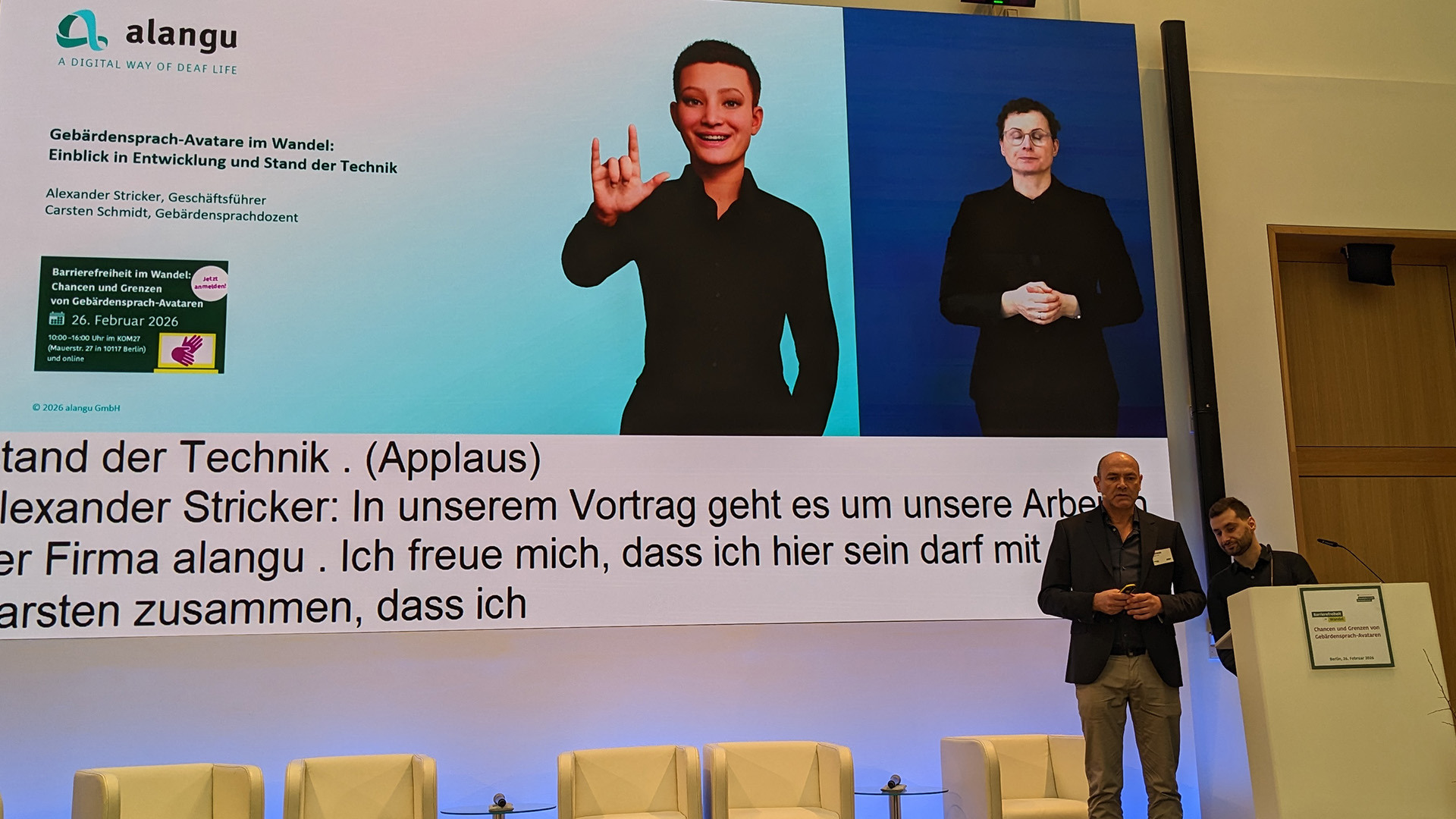
On behalf of alangu GmbH, Alexander Stricker and Carsten Schmidt presented the current state of the technology and demonstrated what is already possible today. We also transparently outlined our quality assurance process — including the integral involvement of Deaf expertise at every key stage of development.
Our clear position: A sign language avatar does not replace sign language interpreters. It is a complementary digital tool that reduces barriers and provides support particularly where human resources are limited.
Especially compelling were the practical examples presented by Landschaftsverband Rheinland (LVR) using our avatar “Livian,” as well as by Landschaftsverband Westfalen-Lippe (LWL). They demonstrate how sign language avatars can already contribute concretely to digital participation today.
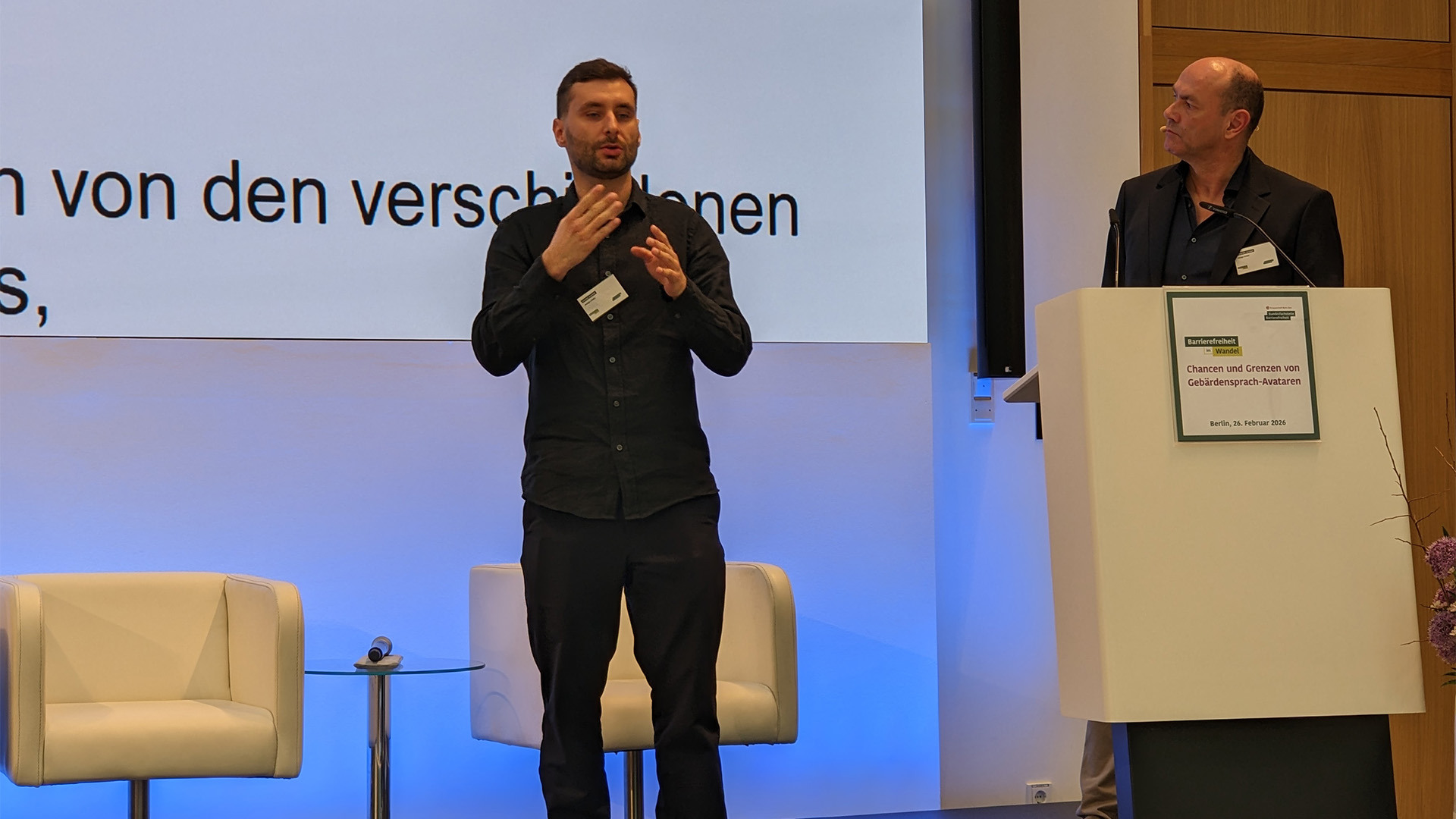
Our current avatar generation continues to evolve. In our presentation, we were also able to offer an outlook on upcoming developments and new AI personas — with the goal of making accessibility even more precise, sustainable, and comprehensible.
Further insights are available here:
https://www.gebaerdensprach-avatar.de/
We look forward to continuing the dialogue on quality standards, ethical guidelines, and the joint development of a binding framework for AI and sign language.
Because one thing is clear: The future of AI-supported accessibility can only succeed through dialogue — between Deaf and hearing people, between technology, practice, and research.
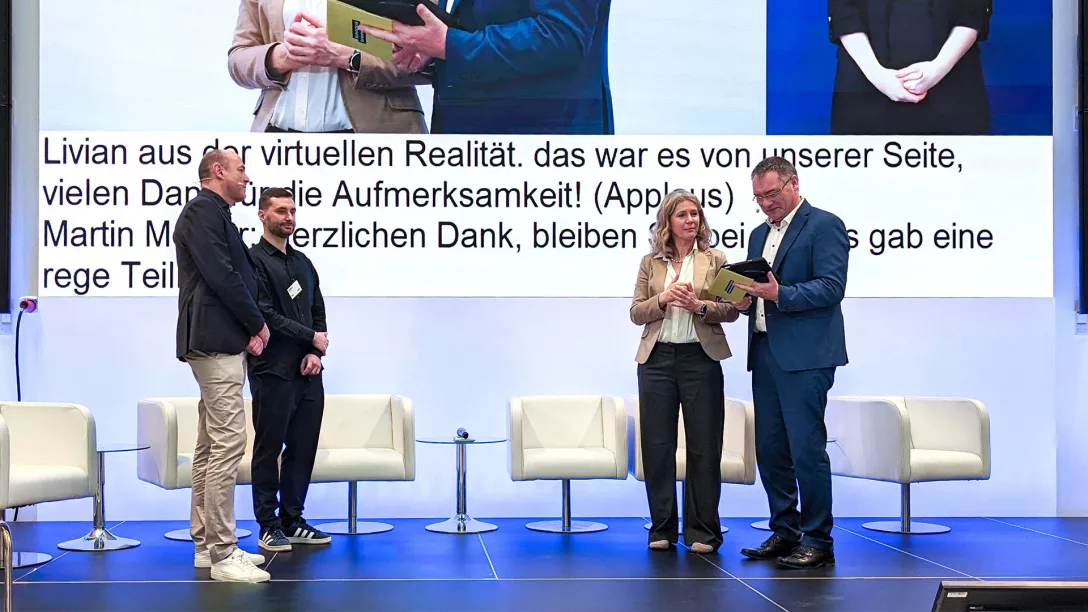
Our sincere thanks to the Bundesfachstelle Barrierefreiheit and all contributors for this thoroughly successful event. Special thanks go to Anke Klingemann and Martin Mölder for guiding the program with great professionalism and visible dedication.